
Rule of thumb: if your attached garage feels noticeably hotter or more humid than the rest of the house, your garage door is probably leaking conditioned air out of your home, not just failing to keep weather out. The exceptions are worth knowing before anyone spends money fixing the wrong thing.
When the Door Isn't Actually the Problem
If your garage has no shared wall with living space, no ductwork running through it, and the door to the house is a solid, weatherstripped exterior-rated door, a leaky garage door mostly just makes the garage itself uncomfortable. It's not pulling much from your AC. The same goes for detached garages — annoying, but not an energy bill issue.
The exceptions matter because so many homes here don't fit that description. A lot of attached garages have a bedroom or laundry room sharing a wall, or they have the air handler and ductwork up in the garage attic space — which is extremely common in Florida construction. In those setups, a leaky garage door isn't a cosmetic issue. It's actively working against your HVAC system.
How a Leaky Door Actually Raises Your Bill
Here's the mechanism, in plain terms: a garage with gaps around the door lets in hot, humid outside air all day, especially during the long stretch of heat most of the year and the humid push that comes with hurricane season storms. That hot air sits against the shared wall and against any ductwork running through the space. Your air conditioner then has to work harder to keep the adjoining rooms at temperature, because heat is constantly transferring through that wall or radiating off ductwork sitting in a hot garage.
If the air handler itself is in the garage, it's worse — the unit is pulling in warmer, more humid return air than it would in a sealed, conditioned space, which means longer run times and more strain on the compressor.
In winter — brief as it is here — the same gaps let cooler, damp night air in, which can make tile or laminate floors in adjoining rooms feel cold and clammy, and can push a heat pump into more frequent cycling.
Symptoms Worth Checking Before You Settle the Debate
- Daylight gaps: Close the door in daytime and look for light coming in around the edges or at the bottom corners. Any visible gap is airflow.
- Worn or missing bottom seal: The rubber strip along the bottom of the door hardens, cracks, and shrinks with heat and sun exposure. A brittle or gapped bottom seal is one of the biggest single leak points.
- Gaps at the sides and top: Weatherstripping (the rubber or vinyl strip around the frame) compresses and dries out over time, especially with repeated exposure to afternoon downpours and heat.
- Warped or swollen panels: Humidity swings cause wood and composite panels to swell, which can push a door out of true and open gaps that weren't there when it was installed.
- Rust at hinges or tracks: More common near the coast, but salt-laden air can travel further inland than people expect. Rust can throw off alignment, which creates gaps even if the seals themselves are fine.
- Garage noticeably warmer than the house by midafternoon: If you've got a thermometer in there, a 15–20 degree gap above outdoor shade temperature is a sign heat is building up with nowhere to go, which stresses the shared wall and any ductwork.
What's Worth Fixing vs. What's Not
Weatherstripping and bottom seals are cheap, fast fixes — national material costs typically run in the range of a few dozen dollars for a standard-width door, and the labor is minimal if you're comfortable doing it yourself. This is almost always worth doing regardless of how bad the leak is, because the cost is so low.
An insulated garage door is a bigger investment, and it's worth it specifically when the garage shares a wall with living space, holds ductwork, or houses the air handler. If none of that applies, an insulated door mostly improves comfort for anyone working in the garage, not your energy bill — still a reasonable upgrade, just a different kind of value.
Off-track doors or doors that no longer sit flush in the frame are a different category entirely. No amount of new weatherstripping fixes a door that isn't closing square. That's a mechanical problem — rollers, track alignment, or a bent panel — not a sealing problem, and it needs to be corrected before new seals will do any good.
When to Call Morriston Garage Door Pro
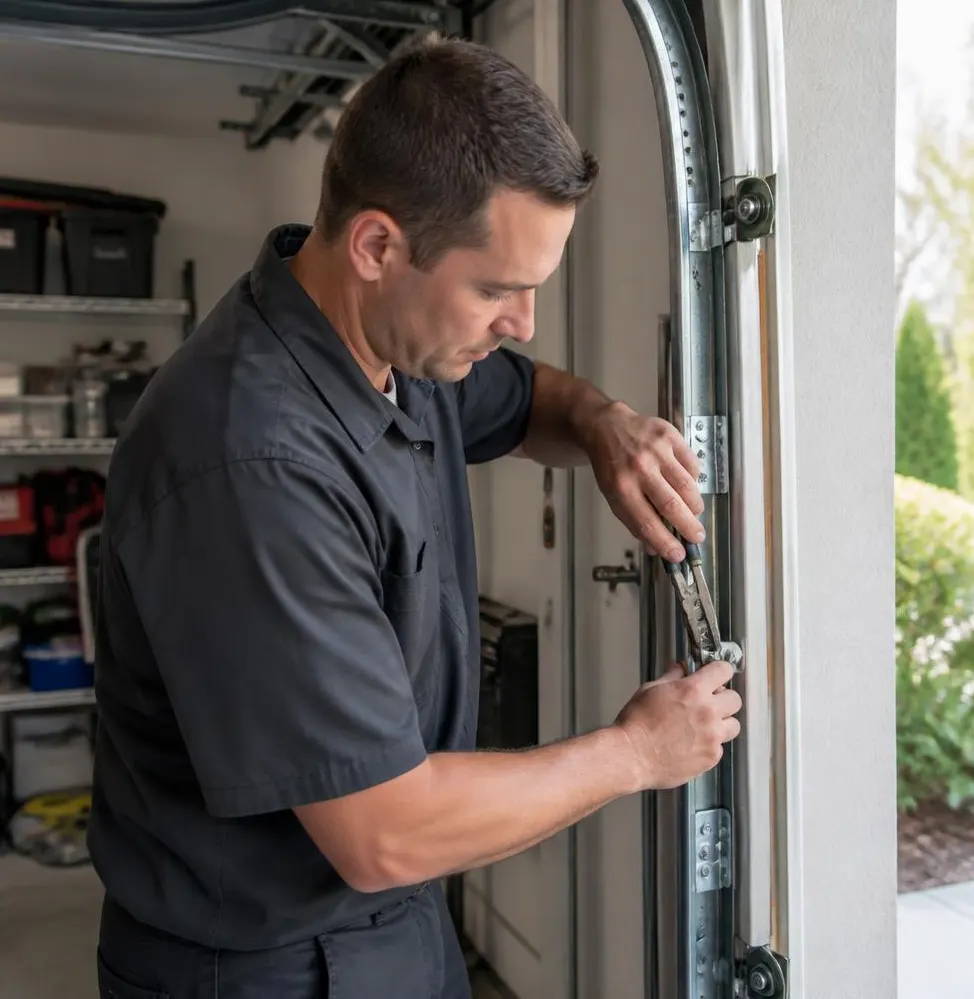
If you've replaced the bottom seal and weatherstripping and you're still seeing daylight, feeling drafts, or noticing the garage running hot, it's time to get it looked at. We handle Garage Door Tune-Up & Maintenance, where we check alignment, hardware, and seals as a full system rather than one part at a time — because a seal replacement on a door that's slightly off track won't hold for long. If the door itself is warped, dented, or swollen from moisture exposure, we also do Garage Door Panel Replacement, swapping out the damaged section instead of the whole door where that's the more practical fix. Either way, we'll tell you plainly whether you're dealing with a quick seal job, an alignment issue, or something that genuinely calls for a new insulated door — and we won't push the more expensive option if it's not what your garage actually needs.
If your attached garage has been running hot, feeling damp, or costing you an argument over the thermostat, call Morriston Garage Door Pro. We serve Morriston, Williston, Bronson, Archer, Newberry, Chiefland, Otter Creek, and Micanopy, and we'll give you a straight answer about what's actually driving your energy bill.