
Rule of thumb: if your garage door is sluggish or seems stuck first thing in the morning, it almost never means the door is frozen to the ground. In most of Florida, including Morriston and the rest of Levy County, our overnight temperatures rarely stay below freezing long enough to form real ice. What looks like a frozen door is usually dried-out lubricant, a swollen seal, or a rusted part acting up in the cooler air.
The exception: after a cold front rolls through behind a rainy evening, temperatures can dip into the 30s for a few hours before sunrise. If water pooled under the door and the bottom seal got wet, it can genuinely freeze to the concrete slab overnight. That's a real, if occasional, cause here, and it behaves differently from the more common issues below.
Symptoms to Watch For
- The door moves a few inches, stops, and the opener motor hums or strains without lifting it further.
- You hear a pop or crack and then the door swings free, as if something let go.
- The bottom edge looks stuck flat against the slab, with the weatherstripping flattened or torn when it finally releases.
- The chain or belt skips or jerks instead of running smoothly.
- The door opens fine by evening but sticks again the next cold morning.
Pay attention to which of these you're seeing, because it points to a different cause further down the list.
What a Technician Checks, in Order
1. The Bottom Seal and Threshold
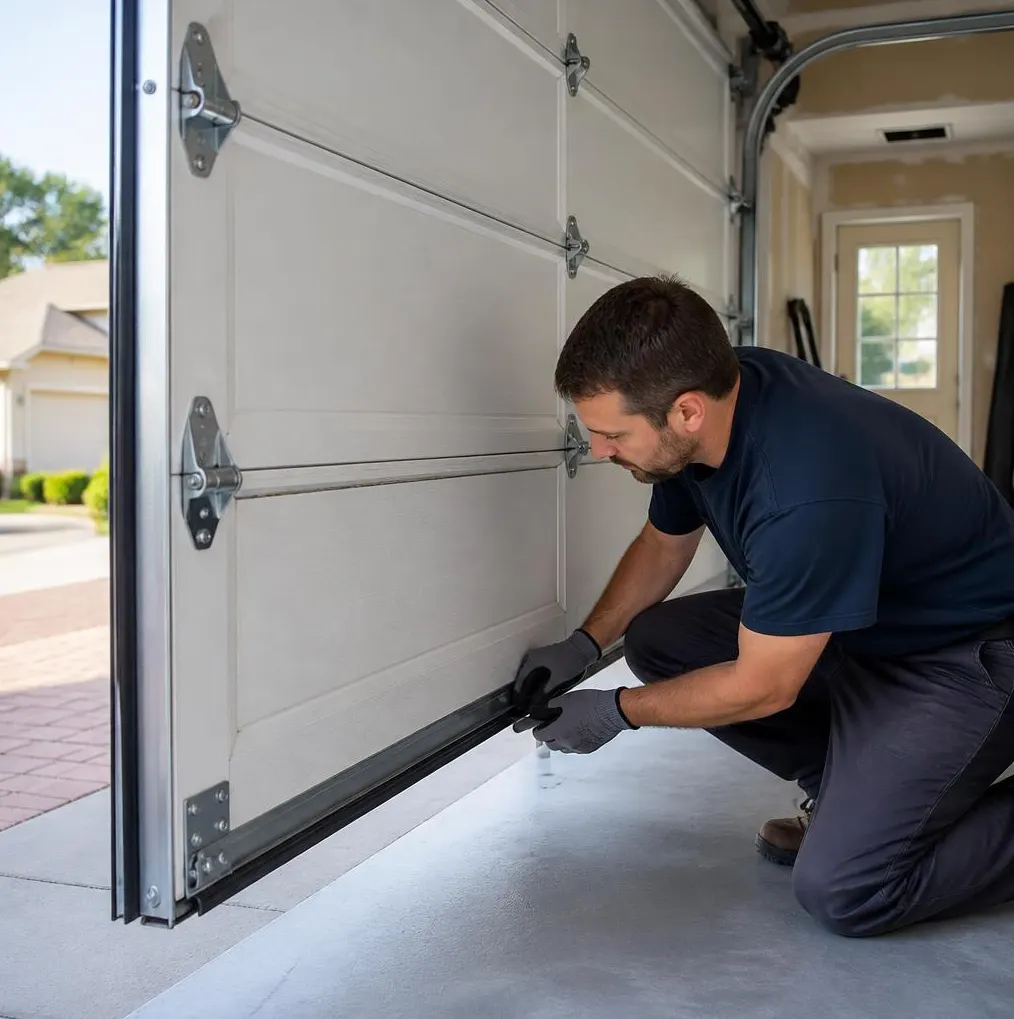
This is the first thing worth checking yourself. If the door was stuck flat to the concrete and released with a sticky, tearing sound rather than a crack, the rubber weatherstripping likely froze to a wet slab or has just gotten stiff and brittle with age and humidity exposure. Never force the opener through this; a stuck seal under load is how tracks bend and panels crack.
The fix: pour warm (not hot) water along the seal to release it, then let it dry before closing again. If the weatherstripping is cracked, split, or has lost its flexibility, it needs to be replaced with a cold-flex PVC seal rated for temperature swings — cheap insurance against repeat sticking.
2. Track and Roller Lubrication
A door that moves a few inches and strains is often fighting dried-out or washed-out lubricant on the tracks and rollers. Our humidity does two things here: it attracts grime that turns lubricant gummy, and it promotes surface rust on steel rollers and hinges that then grabs instead of gliding, especially once the metal contracts slightly in cooler air.
The fix: clean the tracks with a rag (no solvents), then apply a silicone-based garage door lubricant to rollers, hinges, and the spring — never WD-40, which attracts dust and breaks down fast in humid air. Rusted rollers that feel rough or pitted should be replaced rather than lubricated around.
3. Spring Tension
If the door releases with a pop and then swings or drops unevenly, the spring is the next suspect. Steel torsion springs contract slightly in cooler temperatures, but the bigger factor in this climate is corrosion — months of humidity and salt-tinged air (especially closer to the coast) pit the coils, making the spring stiffer and less consistent than it should be. That extra resistance is exactly what makes an opener strain.
The fix: a technician checks spring tension and coil condition, then adjusts or replaces the spring. This is not a DIY repair; torsion springs are under enough force to cause serious injury.
4. Opener Settings and Sensors
If the motor runs but the door barely moves, or reverses unexpectedly, check the photo-eye sensors near the floor. Overnight condensation can fog the lenses, and the opener reads that as an obstruction. Older chain-drive openers also strain more in cold, humid air than belt-drive units.
The fix: wipe the sensor lenses clean and confirm they're aligned. If the door still struggles, the opener's limit settings or gear may need recalibration or replacement.
5. Track Alignment
Wood door frames and jambs swell and shrink with Florida's humidity swings throughout the year. That movement can nudge the track slightly out of alignment, and metal tracks tighten a bit more in cool weather, reducing clearance just enough to cause binding.
The fix: realign the tracks and recheck the gap. If the door has jumped the track entirely, don't try to muscle it back — that's a job for a tech with the right clamps and levelers.
When to Call Morriston Garage Door Pro
If you've cleaned and lubricated the tracks and the door still strains, pops, or sticks on cold mornings, it's time to call. We offer Garage Door Tune-Up & Maintenance to catch rust, worn rollers, and seal problems before they turn into a stuck or off-track door, and Garage Door Spring Repair for springs that have weakened from corrosion or age. We'll diagnose it on-site, show you what's actually failing, and fix it the same visit whenever possible.
Give Morriston Garage Door Pro a call before the next cold snap hits Levy County — a quick tune-up now beats a stuck door and a stressed opener later.